
When national headlines parse the housing market, they are rarely describing anything that resembles what transpires here along the South Carolina Lowcountry coast. The forces shaping luxury real estate in Bluffton, Hilton Head Island, Beaufort, and Coastal Georgia are categorically different from those driving markets elsewhere — and understanding that distinction is what separates informed buyers and sellers from reactive ones.
Luxury Lowcountry real estate is not a product of local employment cycles, mortgage rate fluctuations, or affordability thresholds. It is shaped by wealth migration, tax strategy, lifestyle conviction, and long-term capital thinking. Having spent years on Wall Street before transitioning into this market, I've learned that the most consequential moves are rarely made in response to headlines — they're made in anticipation of what the headlines haven't yet recognized.
Right now, the Lowcountry is one of the most distinctive luxury real estate markets in the country. And the conditions driving that distinction are only becoming more pronounced.
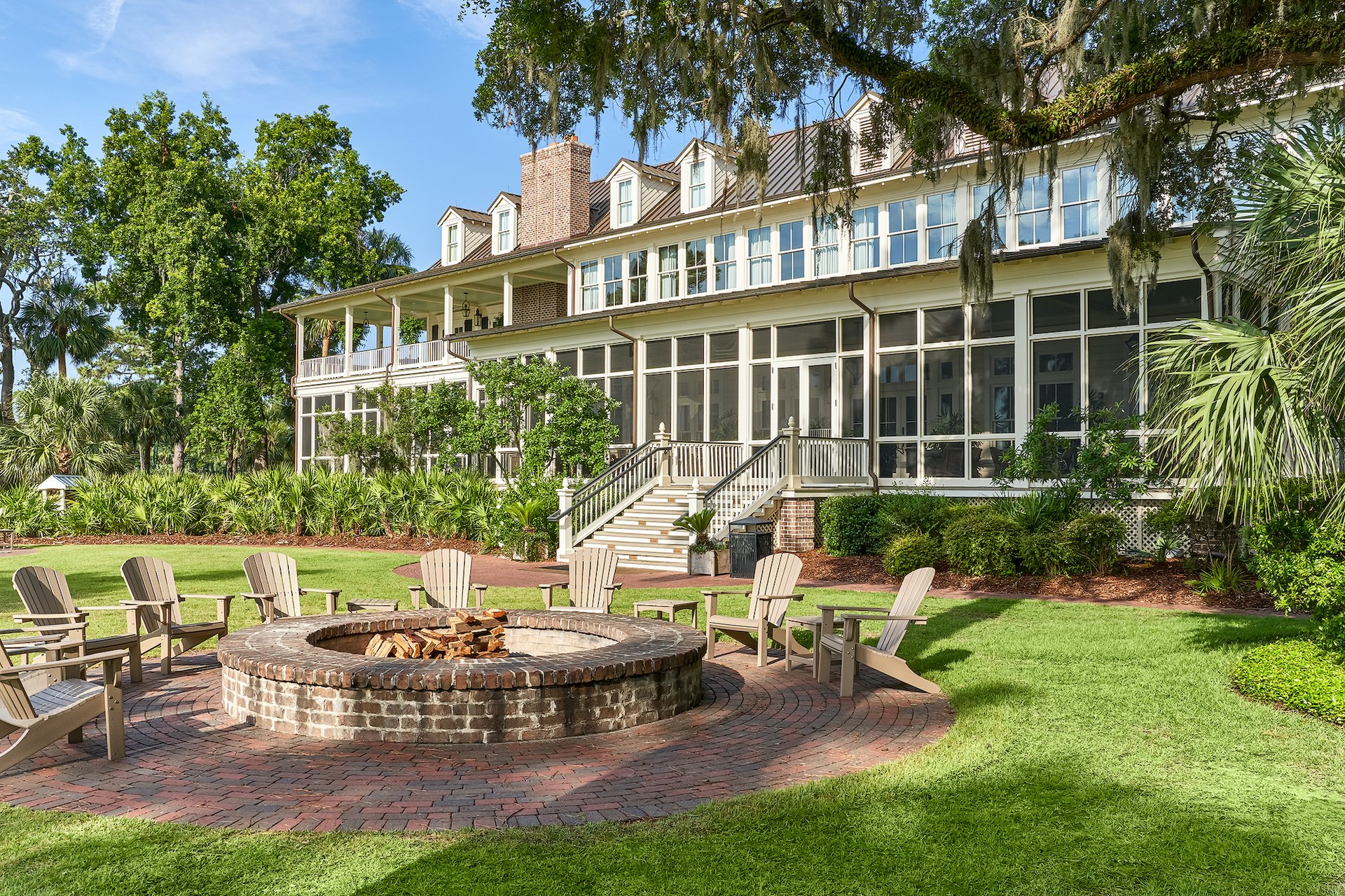
A Market Governed by a Different Set of Principles
The buyers acquiring homes in communities such as Berkeley Hall, Colleton River, Palmetto Bluff, Oldfield, Belfair, and Wexford are not tethered to local employment opportunities. They are retired executives, entrepreneurs, private equity and hedge fund professionals, physicians, attorneys, and business owners — individuals whose purchasing decisions are driven by lifestyle architecture, tax optimization, wealth preservation, and quality of life rather than monthly carrying costs.
This buyer profile creates a market that operates on its own logic. Traditional housing metrics — affordability ratios, days on market relative to median income, mortgage application volume — tell you very little about what's actually happening at the upper end of the Lowcountry market.
The Ongoing Recalibration of Where Wealth Lives
The migration of affluent households away from high-tax, high-density metropolitan areas is not a post-pandemic anomaly. It is a durable structural shift — one that continues to benefit markets like ours in ways that are difficult to overstate.
Clients routinely arrive from New York, Connecticut, New Jersey, Massachusetts, Illinois, and California. What they find here is something increasingly scarce in the places they're leaving: a low-tax environment, a mild coastal climate, private golf and equestrian communities, deepwater access, world-class healthcare, and proximity to major airports — all within a setting that retains genuine character.
Many of these buyers are not simply purchasing a home. They are executing a deliberate repositioning of their lives.
Tax Policy Is Now a Primary Market Driver — Especially From New York and Los Angeles
While Lowcountry buyers have long been drawn in part by South Carolina's favorable tax environment, recent legislative developments in two of the country's most significant wealth centers have meaningfully accelerated that calculus.
New York City's transfer tax structure remains among the most punishing for high-value transactions, with combined city and state transfer taxes reaching 3.9% on residential properties above $3 million — before factoring in mansion taxes, ongoing property tax obligations, and state income tax exposure. And as of May 28, 2026, the pressure on non-resident owners intensified further: Governor Hochul signed the long-debated pied-à-terre tax into law, imposing an annual recurring surcharge of up to 6.5% on secondary residences valued above $1 million — on top of all existing taxes. For a Manhattan pied-à-terre owner who has already relocated to the Lowcountry, the question is no longer abstract: why maintain a New York footprint that now carries a six-figure annual tax obligation with no corresponding benefit to their financial life?
Los Angeles presents an equally compelling case for departure. The Measure ULA "mansion tax," which took effect in 2023, imposes a 4% transfer tax on property sales above $5 million and 5.5% on those above $10 million — an extraordinary friction cost at closing that has visibly suppressed high-end transaction volume and prompted serious reconsideration among LA's affluent homeowner class about where to hold real estate assets.
Against this backdrop, South Carolina's comparatively modest tax structure — no estate tax, favorable income tax treatment, and reasonable property tax assessments for primary residences — is not merely a pleasant feature. For many buyers, it is a core component of the investment thesis.
Interest Rates Are a Secondary Variable
One of the most persistent misconceptions about luxury real estate is that rising interest rates suppress demand in the same way they do in broader markets. At the upper end, the correlation is far weaker.
Many luxury transactions involve substantial cash positions, significant equity, diversified investment portfolios, or sophisticated financing structures that operate independently of conventional mortgage markets. When rates move, the more meaningful variables for this buyer cohort are equity market performance, business valuations, corporate liquidity events, and tax policy — not the spread between a jumbo rate and a treasury yield.
A strong quarter in public markets often has more direct bearing on luxury buyer confidence than a 50-basis-point move in the fed funds rate.
Scarcity Is Structural, Not Cyclical
Unlike many Sunbelt markets where inventory constraints are temporary, the Lowcountry's supply limitations are permanent by nature. Coastal marshes, tidal waterways, conservation easements, and protected land physically constrain what can be built. Within premier private communities — Berkeley Hall, Colleton River, Palmetto Bluff among them — available homesites are not merely scarce today. They will remain scarce indefinitely.
This is not a market dynamic that resolves itself with a new development cycle. It is geography functioning as a moat.
Over long time horizons, structural scarcity tends to underwrite value in ways that oversupplied markets simply cannot replicate.
Lifestyle Has Become an Asset Class
Today's most sophisticated buyers are no longer evaluating property solely on the basis of square footage, finishes, or price-per-acre metrics. They are evaluating what a property — and a community — delivers as a lived experience.
The Lowcountry's answer to that question is compelling: championship golf, private club culture, deepwater boating, equestrian facilities, expansive outdoor recreation, an evolving culinary scene, historic coastal character, and communities with genuine social fabric. For many buyers, this constellation of amenities becomes as integral to the investment decision as the property itself.
Global Reach Is Now a Competitive Requirement
Luxury real estate is no longer marketed regionally. It is marketed globally — and the distinction matters enormously to both buyers and sellers.
My decision to align with The Agency was driven in part by the firm's international platform and its network of offices across North America, Europe, Mexico, the Caribbean, and beyond. A qualified buyer for a luxury home in Bluffton may be a hedge fund executive transitioning out of New York, a technology entrepreneur departing Austin, a family escaping California's tax environment, or an international purchaser seeking a premier U.S. coastal address.
Access to that audience requires infrastructure and relationships that extend well beyond the MLS.
The Wall Street Perspective Applied to Real Estate
My years in New York finance instilled one discipline above all others: understand the structural forces shaping a market before the consensus does.
The most successful buyers and sellers in luxury real estate approach it the same way. They understand supply and demand dynamics, track wealth migration patterns, analyze tax policy implications, and think in terms of long-term capital preservation rather than short-term market timing.
Real estate — particularly luxury coastal real estate in a constrained, high-demand market — is not simply a lifestyle asset. For most affluent families, it represents a meaningful component of overall wealth. Treating it as such leads to better decisions across every phase of the market cycle.
Frequently Asked Questions
Is Bluffton luxury real estate still a compelling investment? The fundamentals — constrained supply, strong migration demand, a favorable tax environment, and a lifestyle offering that is genuinely difficult to replicate — suggest continued long-term resilience. Many buyers view it as both a lifestyle acquisition and a capital-preservation vehicle.
Why does the Lowcountry tend to outperform broader market downturns? The buyer profile is less sensitive to financing costs, the inventory is structurally limited, and the demand drivers — tax strategy, lifestyle, wealth migration — are durable rather than cyclical.
Which communities attract the most discerning buyers? Berkeley Hall, Colleton River, Palmetto Bluff, Belfair, Oldfield, Wexford, and select deepwater and waterfront communities throughout Bluffton and Hilton Head consistently attract high-net-worth purchasers at the top of the market.
Is South Carolina still a preferred destination for relocation? Consistently. The combination of tax structure, coastal lifestyle, and relative affordability compared to the markets buyers are leaving continues to make this region one of the most compelling relocation destinations in the country.
Final Thoughts
The luxury real estate market in the Lowcountry is not following national housing trends — it is operating according to a fundamentally different set of drivers: wealth migration, tax-motivated repositioning, lifestyle demand, structural scarcity, and global buyer exposure.
The headlines describe a market. The data describes this one.
If you are considering buying or selling luxury real estate in Bluffton, Hilton Head Island, Beaufort, or Coastal Georgia, working with an advisor who understands both the local dynamics and the broader capital forces shaping them is not merely an advantage — it is the difference between reacting to the market and positioning ahead of it.
The Agency Hilton Head, Beaufort & Savannah | Alison Melton, Managing Partner & Broker-in-Charge